
Your AI SRE teammate.
Always on.
Coworker watches your services, investigates what it sees, and tells your team what needs attention — in plain language, without anyone opening a dashboard.
Your stack never sleeps. Your team can't watch it all.
Engineering teams in 2026 have more observability data than ever. Metrics, logs, traces, alerts — collected, stored, sitting in dashboards waiting for someone to check them.
That someone is your team. And they have other things to do.
The promise of AI SRE was that the AI would do the watching. For most tools, it became another layer of noise — more alerts surfaced, more things to triage, the same manual investigation loop.
Coworker breaks that loop.
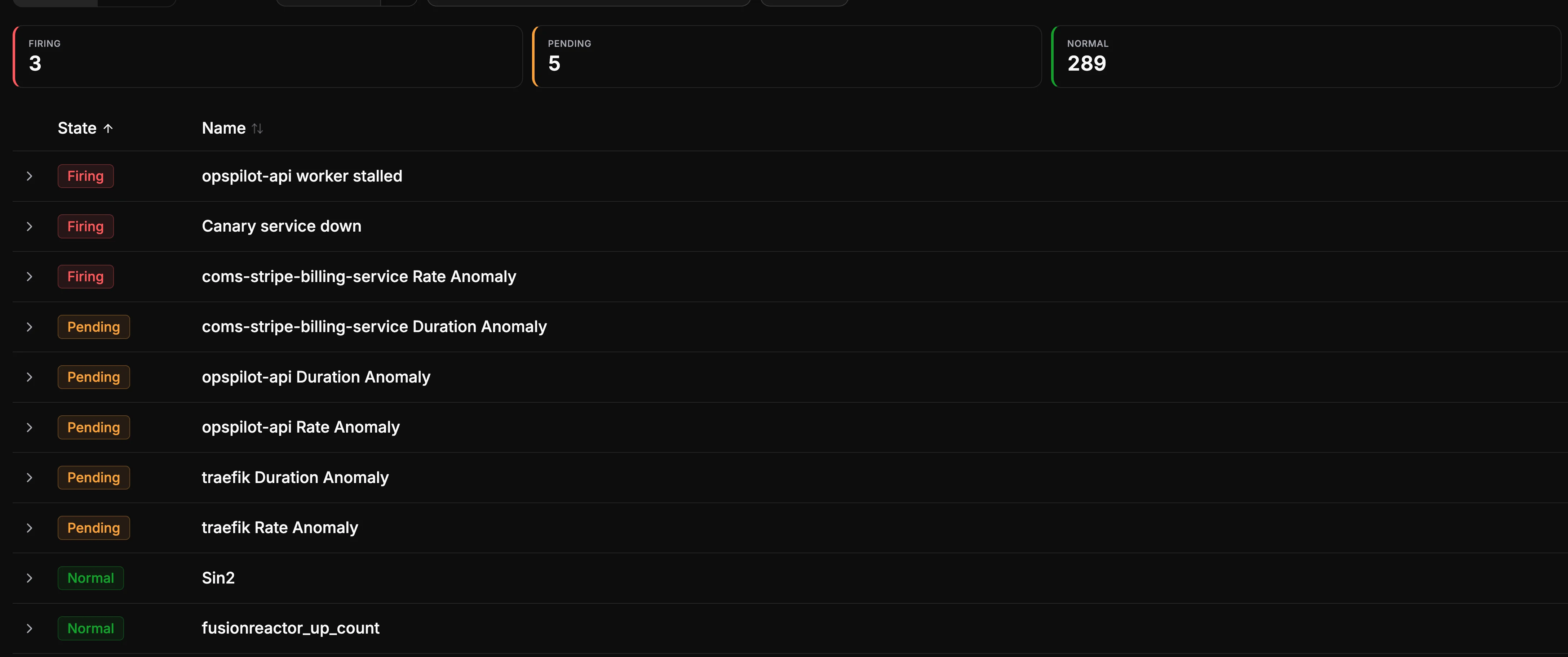
One teammate. Three jobs running all the time.
While you're away, Coworker is working. Here's what it's doing.
Investigating new signals
When an alert fires or a scheduled task runs, Coworker investigates immediately — pulling metrics, logs, and traces, writing insights, and deciding what to do with the result. Alerts that arrive close together are treated as one problem, not many.
Tidying up continuously
Every few minutes, Coworker sweeps active situations: merging duplicates, escalating when a new signal warrants it, attaching stray findings where they belong. The picture stays coherent.
Re-checking what's open
Every active situation is re-investigated on a cadence matching its severity. Criticals every 10–15 minutes. When something resolves, Coworker closes it and tells you why. If it comes back, Coworker reopens it.
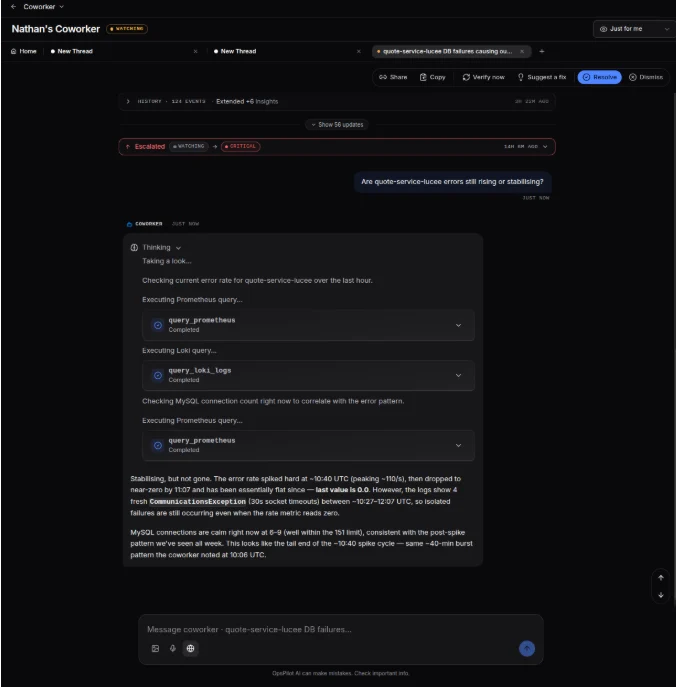
What your team gets, every day
Alert investigation
Coworker investigates every alert — pulling traces, logs, and metrics, correlating signals across services, and surfacing what actually caused the problem. No manual triage.
Intelligent alerting →Scheduled checks
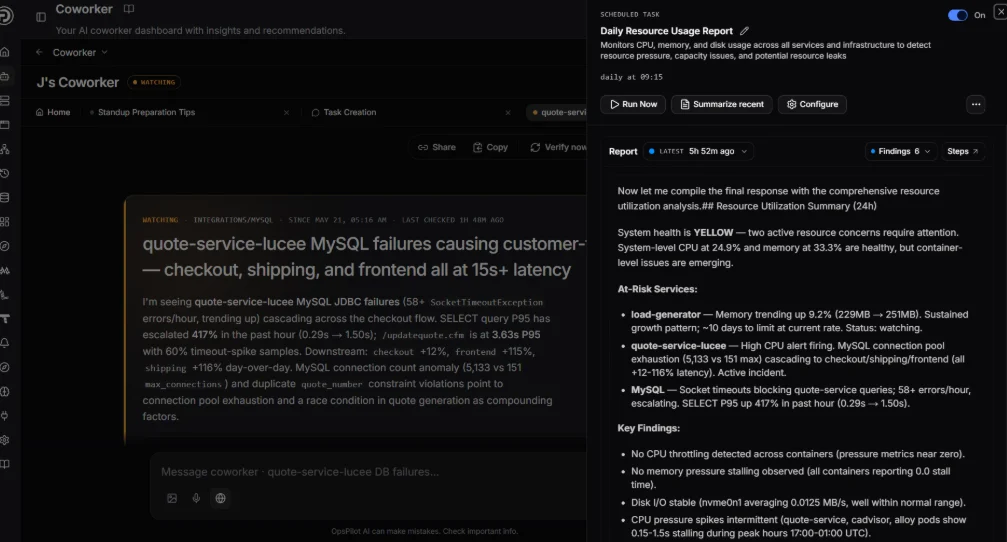
Give Coworker standing instructions in plain language. "Every morning, check overnight error rates." It runs them on your schedule, quietly, and only tells you when there's something worth knowing.
Proactive monitoring
Coworker notices problems before alerts fire — spotting anomalies in your OpenTelemetry data, identifying patterns that precede incidents, and raising situations early.
Proactive AI →Plain-language findings
Every investigation produces a finding: what happened, what changed, what the likely cause is, and what to do next. Delivered to Slack, Microsoft Teams, or wherever your team works.
Start where you are. Move at your own pace.
Coworker works across a spectrum from reactive to fully autonomous. Choose your mode — change it anytime.
The longer it works alongside you, the sharper it gets.
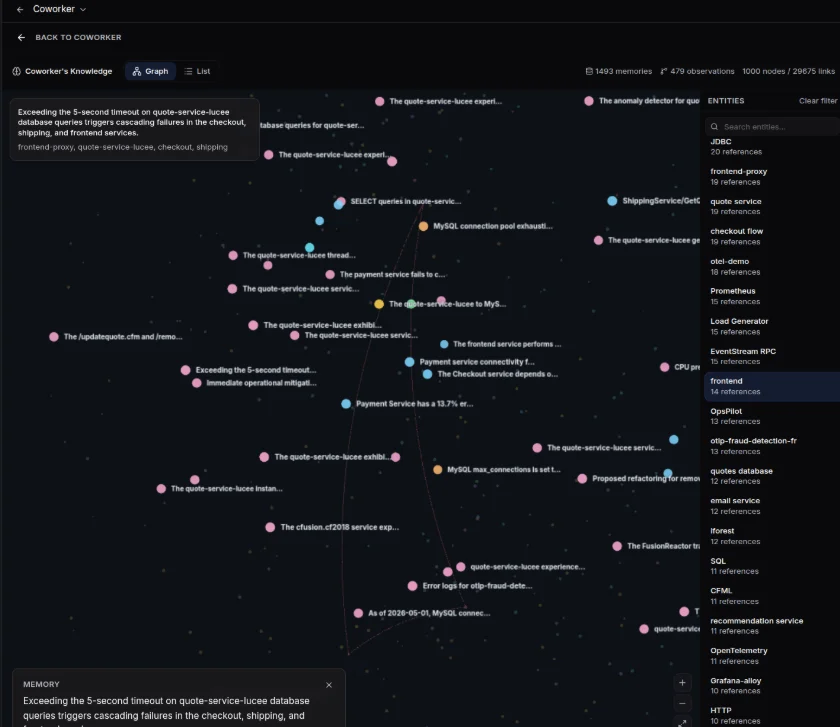
Coworker remembers what it learns. Every alert investigated, every task completed, every correction you make — it builds a growing understanding of how your specific systems behave.
When Coworker raises something that isn't a problem, dismiss it with a reason. That correction becomes a lasting fact about your system. Next time it sees the same pattern, it won't raise it again.
The result: investigations get faster. Its judgment about what's worth your attention gets sharper. Your team spends less time in the noise.
No rip-and-replace. No new agents.
Coworker connects to your stack via OpenTelemetry's OTLP standard. If you're running Grafana, Prometheus, Datadog, or New Relic — Coworker adds the AI SRE intelligence layer on top of what you already have.
Most teams connect their first data source and receive their first AI SRE analysis within 24 hours. If you're already sending OTLP data, setup takes under 5 minutes.
How OpsPilot works with OpenTelemetry →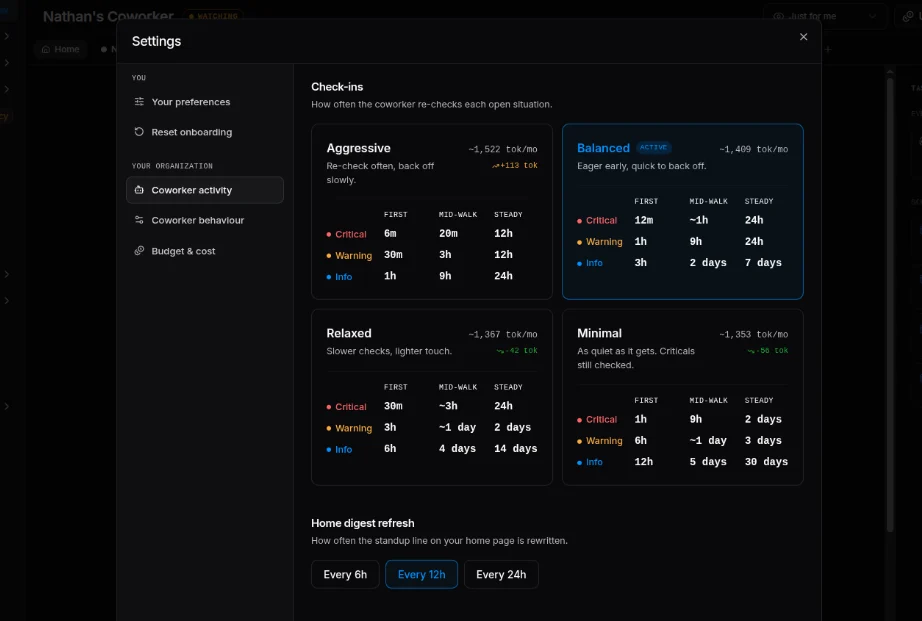
Common questions about Coworker
See Coworker working on your stack.
Book a 30-minute demo and watch Coworker investigate a real alert, run a scheduled check, and produce a finding. No configuration required on your end.